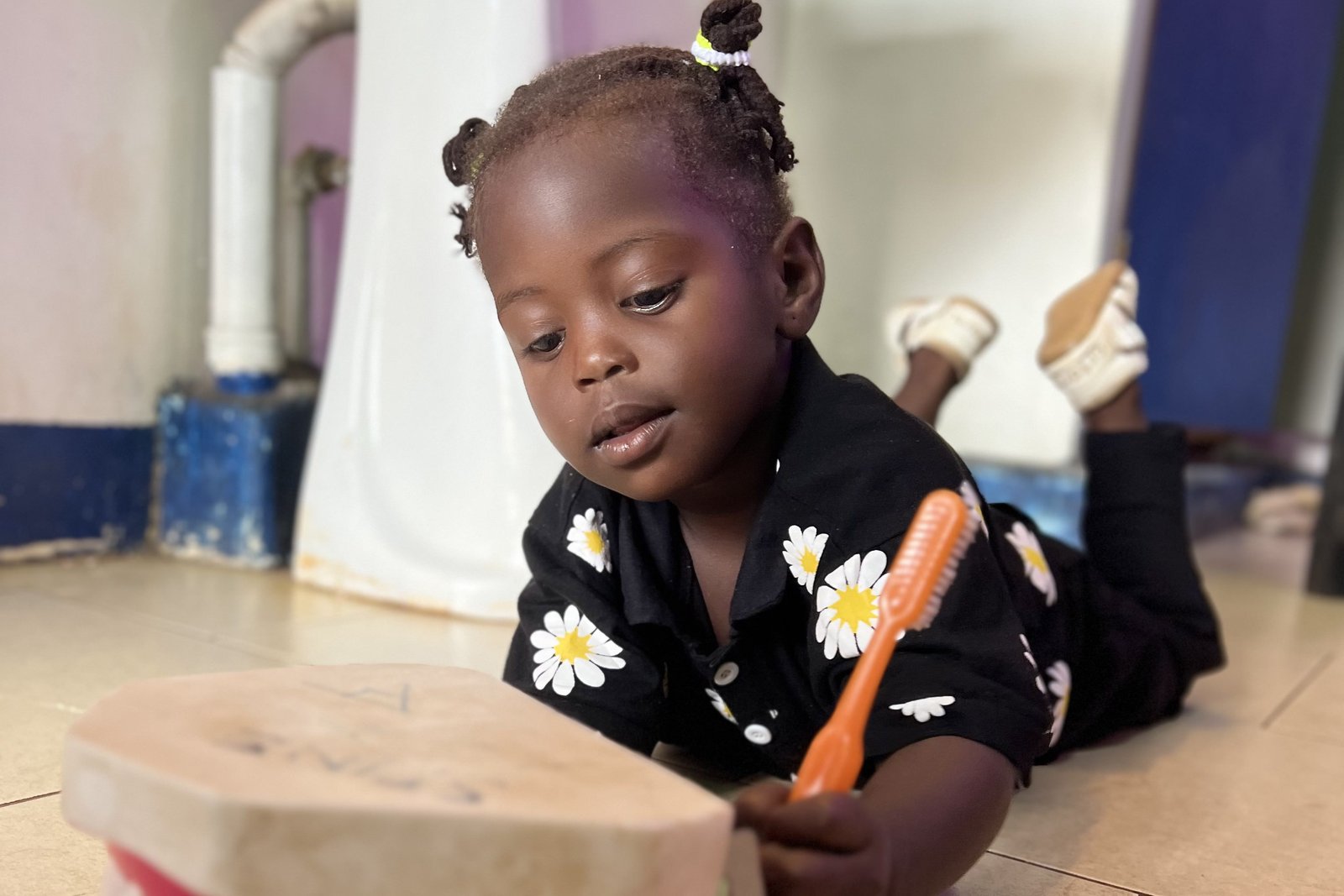
A child's first dental visit shouldn't be a crisis. It shouldn't happen because a tooth is throbbing in the middle of the night. By that point, we're playing catch-up — and the child's first memory of a dentist is one of pain.
The good news: the first dental visit can be a positive experience. A short, gentle, friendly introduction — done early — sets your child up for a lifetime of healthy teeth without dental fear. Here's how we approach it at Piwan Dental, and what every parent in Northern Uganda should know.
When should your child first see a dentist?
The Uganda Dental Association and World Health Organization both recommend the same thing: by age one, or within six months of the first tooth appearing — whichever comes first.
That sounds early to many parents. "But they barely have teeth yet!" The point of the early visit isn't extensive treatment — it's three things:
- Catching early decay before it becomes painful
- Teaching parents how to clean and care for the new teeth
- Letting the child meet the dentist before any treatment is needed, so the chair becomes familiar rather than scary
What happens at a first visit at Piwan
The whole appointment is about 30 minutes. Most of it isn't even in the chair.
First 10 minutes — meet, play, look around. Your child gets to walk around the room, touch the equipment, sit in the chair (or on a parent's lap), and look at the big teeth model. We name everything — "this is the light, this is the chair that goes up and down, this is the little mirror." No surprises.
Next 10 minutes — a gentle look inside. The dentist counts teeth, checks for early decay or alignment issues, and shows the child what's happening using a mirror they can hold. No drills, no needles, no procedures at the first visit (unless something needs urgent attention).
Last 10 minutes — questions, tips, and a small gift. Parents leave with concrete brushing instructions for their child's age, sometimes a small toothbrush. Every child leaves with a sticker.
How to prepare your child
- Don't use scary words. No "drill," no "needle," no "shot," no "pull." If you're nervous about dentists yourself, the child will pick it up.
- Read a friendly dentist book a few days before. Many libraries and bookshops in Gulu now stock children's books about doctor and dentist visits.
- Book a morning appointment. Children are most cooperative early in the day, before they're tired or hungry.
- Bring a favourite toy. A teddy bear can sit in the chair first to "have its teeth counted."
- If your child cries, that's okay. It's a new environment. We don't rush, we don't force. If the visit needs to be cut short, we reschedule.
What we look for in young children
Even very young teeth can show problems that, caught early, are easy to fix:
- Bottle decay — common in toddlers who fall asleep with a bottle of milk or juice. The sugars sit on the front teeth all night.
- Enamel hypoplasia — thin or weak enamel that needs protective sealants
- Early misalignment — sometimes treatable with simple appliances later if caught at age 4–6
- Tongue-tie — affects feeding and speech; we refer for treatment if needed
- Habit issues — thumb sucking, prolonged pacifier use, tongue thrusting
What does it cost?
A pediatric check-up at Piwan Dental starts at UGX 25,000 — the most affordable visit in our service list. We made it that way intentionally. The cost of catching a small problem now is a tiny fraction of treating a major one later.
Outreach: when families can't come to us
Through Oral Health Uganda, our nonprofit, we visit schools across Northern Uganda monthly. Free check-ups, free brushing demonstrations, free toothbrushes for every child. If you teach at or run a school and want us to visit, message us on WhatsApp.
The bottom line
Bring your child in by age one. Make the first visit a fun introduction, not a treatment emergency. Brush together at home. Limit sugary drinks. Show up for the six-month check-up.
It's a simple formula, and it works. The children we see for routine care from age one rarely need anything more than cleanings and fluoride through their teenage years.